Turn your antenna toward the sky and discover the excitement of receiving real messages from a satellite in space.
Can You Hear a Message from Orbit?
One of the most exciting aspects of amateur radio is that your next contact doesn’t always have to come from another station on Earth. Sometimes, it comes from space.
The icMercury “Catch a Message from Space” Challenge invites amateur radio operators, SDR enthusiasts, educators, and curious beginners to receive and decode transmissions from SpinnyONE (HADES-SA), a tiny PocketQube satellite orbiting Earth. The challenge offers a fun way to experience satellite communications while learning valuable operating skills. (icMercury)

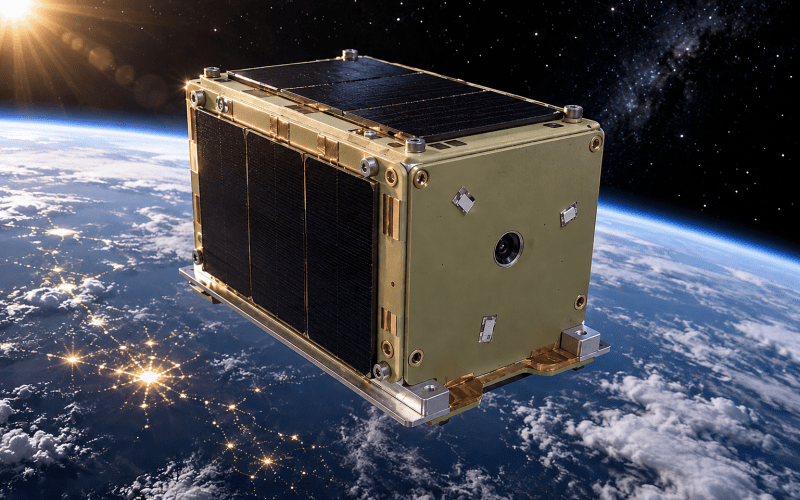
Meet SpinnyONE (HADES-SA)
Don’t let its size fool you. Measuring only 5 × 5 × 8 cm and weighing approximately 400 grams, SpinnyONE demonstrates just how capable modern PocketQube satellites have become.
As it circles the Earth, the satellite transmits:
- Digital text messages
- Voice transmissions
- SSDV images
- Mission and telemetry data
Every satellite pass provides an opportunity to capture something unique directly from orbit. (icMercury)
What You’ll Need
Getting started is easier than many operators expect. Basic equipment includes:
- A UHF antenna
- A receiver or SDR capable of receiving 436.875 MHz
- USB (Upper Side Band) reception capability
- Digital decoding software such as SoundModem
Unlike transmitting through amateur satellites, simply receiving these signals does not require an amateur radio license, making this an excellent introduction for newcomers interested in radio and space communications. (icMercury)
Why This Challenge Is Perfect for Ham Radio Operators
Satellite operation combines several exciting parts of amateur radio into one activity:
- Tracking fast-moving satellites
- Improving antenna pointing techniques
- Learning digital communications
- Experimenting with software-defined radios (SDRs)
- Decoding real transmissions from orbit
Whether you’re an experienced satellite operator or just getting started, every successful reception is incredibly rewarding.
Planning Your Reception
Success begins with timing.
Before listening, check when SpinnyONE will pass over your location. Satellite tracking software or the icMercury app can display upcoming passes and help you determine the best listening opportunities.
Once the satellite rises above your horizon:
- Tune your receiver to 436.875 MHz
- Follow the satellite across the sky.
- Record the received audio if possible.
- Decode the transmission using your preferred software.
- Share your successful reception with the community. (icMercury
)
A Great Learning Experience
Projects like this demonstrate why amateur radio remains one of the most exciting technical hobbies available.
Receiving a signal that has traveled hundreds of kilometers from a satellite overhead teaches practical skills in:
- Radio propagation
- Doppler shift
- Antenna performance
- Digital signal decoding
- Satellite tracking
It’s also an excellent activity for radio clubs, schools, and STEM programs looking to inspire the next generation of operators.
Final Thoughts
Satellite communications continue to be one of the fastest-growing areas of amateur radio. Challenges like Catch a Message from Space make it easier than ever for operators of all experience levels to participate in real space communications.
If you’ve never pointed an antenna toward the sky, now is the perfect time to start. With a modest station, a little preparation, and some patience, you may soon decode your very first message sent from orbit.
Who knows? Your next DX might not be across the ocean—it might be 500 kilometers above your head.
Discover more from KE2YK
Subscribe to get the latest posts sent to your email.

