
Pip: Ham radio and software have always had a complicated relationship — somewhere between “it just works” and “have you tried reinstalling Linux at midnight.”
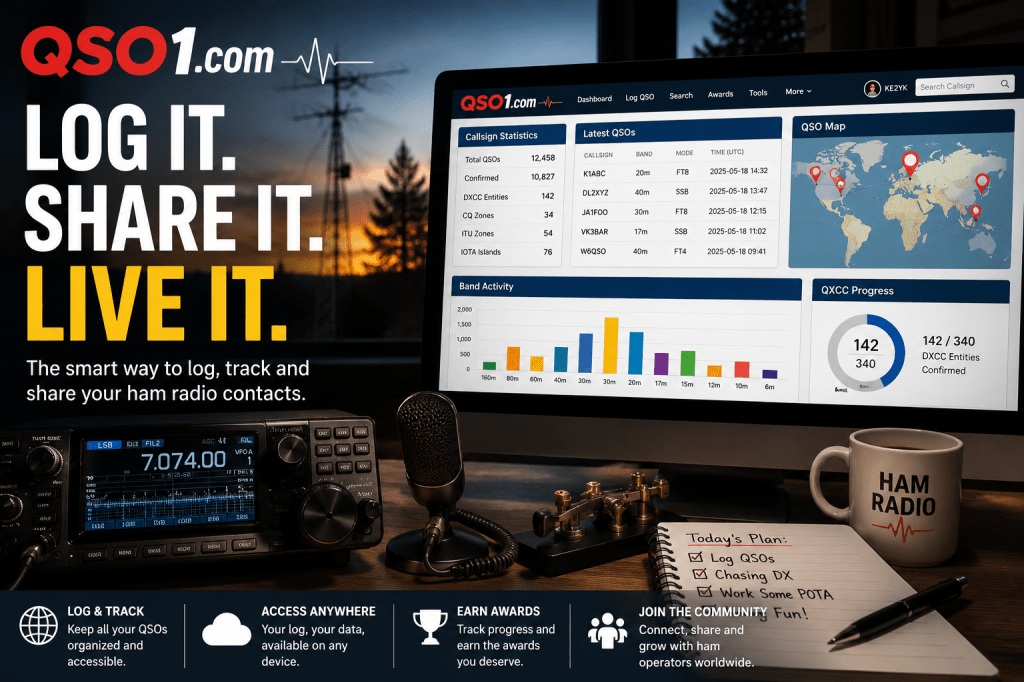
Mara: This episode, KE2YK takes us into the world of modern digital voice networking, specifically a new application called QSO One that’s trying to change how operators connect to AllStarLink, EchoLink, DMR, and M17. Let’s start with what QSO One actually is and why it matters.
QSO One: One App, Many Digital Networks
Pip: The pitch here is consolidation — instead of juggling separate clients or building dedicated hardware just to get on a digital voice network, one application handles the whole stack. The real question is whether it delivers on that promise.
Mara: The post sets up the problem directly before answering it: “Building a traditional AllStarLink node can require a Raspberry Pi, radio interface hardware, Linux installation and configuration, network port forwarding, hours of setup and maintenance.” QSO One removes those barriers by letting operators connect through devices they already own.
Pip: So the upshot is that the gatekeeping here was never technical necessity — it was just accumulated friction. If your entry ticket to AllStarLink was a weekend of Linux troubleshooting, a lot of people quietly opted out.
Mara: Exactly, and the scope is broader than just AllStarLink. The application brings together AllStarLink in both Node Mode and Web Transceiver Mode, EchoLink with direct and proxy connections, DMR via BrandMeister and TGIF, and M17 digital voice reflectors — all from one interface, on Windows 10, Windows 11, or Android 8.0 and newer.
Pip: Four networks, one install, no Raspberry Pi. That’s a meaningful sentence for anyone who’s ever stared down a fresh Raspbian image at 11 p.m.
Mara: The feature set goes beyond basic connectivity too. There’s full DTMF support, a large node directory, Android background operation, and a modern dark-themed interface. An optional Pro subscription adds Net Finder, QSO logging with ADIF export, Scanner Mode, audio recording, callsign lookup, and DX alerts.
Mara: And the post includes firsthand beta-testing experience: “Each release of the beta code is packed with fixes, enhancements and new features,” with the embedded Pro version offering a schedule of active nets joinable directly through AllStar, DMR, or EchoLink.
Pip: macOS, iOS, and Linux support are listed as in development — so the platform story isn’t complete yet, but licensed users get those updates when they arrive.
Mara: The throughline is accessibility without compromise — lower barrier to entry for newcomers, but enough depth that experienced operators aren’t leaving features behind.
Pip: Digital voice networking has always been capable. The friction was in the setup, not the technology itself.
Mara: QSO One seems to be betting that removing that friction changes who shows up on the air. Worth watching as the platform matures.
Discover more from KE2YK
Subscribe to get the latest posts sent to your email.

