
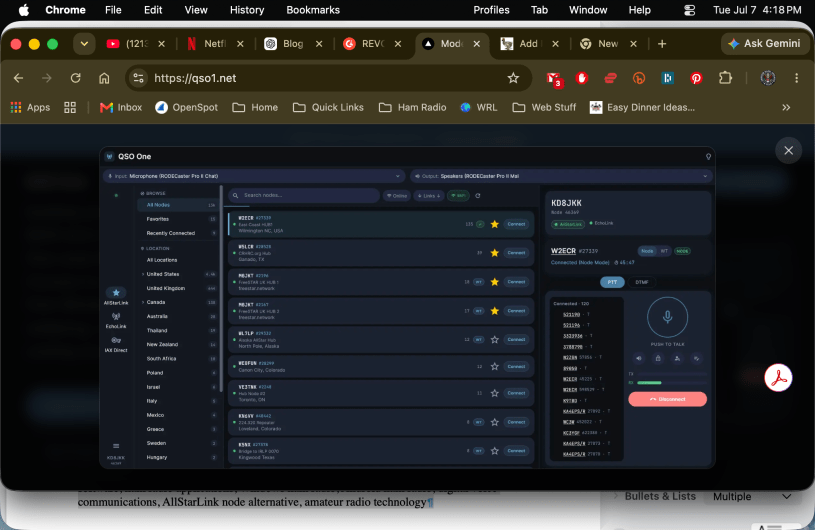
Discover how QSO One simplifies AllStarLink, EchoLink, DMR, and M17 communications with a modern, easy-to-use application—no Raspberry Pi, no complicated Linux setup, just amateur radio made simple.
QSO One: Amateur Radio Reimagined
For years, amateur radio operators wanting to access AllStarLink remotely often faced a familiar challenge—building and maintaining a dedicated node. Between purchasing hardware, configuring Linux, and troubleshooting network issues, getting on the air could become a project all by itself.
QSO One changes that.
Designed from the ground up for today’s amateur radio operator, QSO One provides a single, modern application that connects to multiple digital voice networks without requiring dedicated hardware. Whether you’re operating from your desktop or your Android device, QSO One brings together AllStarLink, EchoLink, DMR, and M17 into one clean, intuitive interface.
One Application. Multiple Networks.
Instead of juggling multiple programs, QSO One allows operators to access:
- AllStarLink (Node Mode and Web Transceiver Mode)
- EchoLink (Direct and Proxy connections)
- DMR using BrandMeister and TGIF
- M17 digital voice reflectors
Everything is accessible from a unified interface designed specifically for amateur radio operators.
Skip the Hardware
Building a traditional AllStarLink node can require:
- A Raspberry Pi
- Radio interface hardware
- Linux installation and configuration
- Network port forwarding
- Hours of setup and maintenance
QSO One removes those barriers by allowing operators to connect using devices they already own. Installation takes only a few minutes, making it especially appealing for newcomers and experienced operators who simply want to get on the air without becoming a system administrator.
Available Platforms
QSO One is currently available for:
- Windows 10 and Windows 11
- Android 8.0 and newer
Support for macOS, iOS, and Linux is currently in development, with future platform updates included for licensed users.
Built for Serious Operators
Beyond basic connectivity, QSO One includes features designed to improve day-to-day operating:
- Full DTMF support
- Large node directory
- Android background operation
- Reliable network connectivity
- Modern dark-themed interface
An optional QSO One Pro subscription adds advanced capabilities such as:
- Net Finder
- QSO logging with ADIF export
- Scanner Mode
- Audio recording
- Callsign lookup
- DX alerts
- Additional features planned for future releases.
Why QSO One Stands Out
One of the biggest advantages of QSO One is its focus on simplicity without sacrificing functionality.
Rather than requiring operators to learn Linux administration or assemble custom hardware, the application provides an approachable solution that lowers the barrier to participating in digital amateur radio networks while still offering the features experienced operators expect.
As amateur radio continues to embrace internet-linked communication, applications like QSO One help make these technologies more accessible to everyone.
Final Thoughts
Among many others, I have been beta testing the new releases of QSO One. The app is all that it claims to be. Each release of the beta code is packed with fixes, enhancements and new features. The embedded Pro version (free for beta testers) offers a schedule of active nets you can easily join using Allstar, DMR or Echolink.
Whether you’re new to AllStarLink or looking for a modern replacement for aging client software, QSO One offers an impressive solution that combines multiple digital voice services into one polished application.
For operators who value convenience, portability, and ease of use, it’s a refreshing approach to internet-connected amateur radio.
73 de KE2YK Catch you on the Digital Modes!
 Ham Radio Reviews and Events
I’m a Mac user
Sent from my iPhone
LikeLiked by 1 person